

Production-ready assistance functions for mobile machinery
The off-highway industry is increasingly focussing on mobile machines that are highly networked and drive semi-autonomously. As a result, the need for assistance systems that take the strain off the driver is growing. High-performance controllers with AI integration, robust sensor technology, communication modules and comprehensive cloud services interlock seamlessly and enable innovative functions that meet the demanding requirements off the road. With their expertise, the exhibitors at SYSTEMS & COMPONENTS from 9 to 15 November also want to provide a sustainable answer to the impending shortage of skilled workers.
Be it difficult terrain or changing weather conditions - many decisions in off-highway operations have to be made within a very short space of time to ensure that work processes run smoothly. There is a further challenge in the agricultural environment: Here, drivers often have to control two machines at the same time - with a significant increase in time spent on frequently repetitive tasks that require maximum attention. "Autonomous functions can be a great support for operators," says Petra Kaiser. "The large variety of different machines on the market leads to a high demand for modular and flexible assistance systems, which is reflected at SYSTEMS & COMPONENTS both at the stands and in the presentations on the Expert Stage," says the responsible Brand Manager of the DLG (German Agricultural Society).
Functions for more productivity and security
Supporting the operator in the cockpit is therefore a topic that will play a central role at the exhibition centre in Hanover, as well as at Agritechnica, which is taking place at the same time. With their smart sensors and intuitive control units, advanced assistance systems have both experienced and less experienced or qualified drivers in mind. "The aim is not least to exploit the full potential of mobile machinery to make it even more productive," emphasises Kaiser. Because unlike vehicles on the road, off-highway machines are all about automating tasks. Extremely repetitive tasks are therefore the prime candidates for assistance functions.
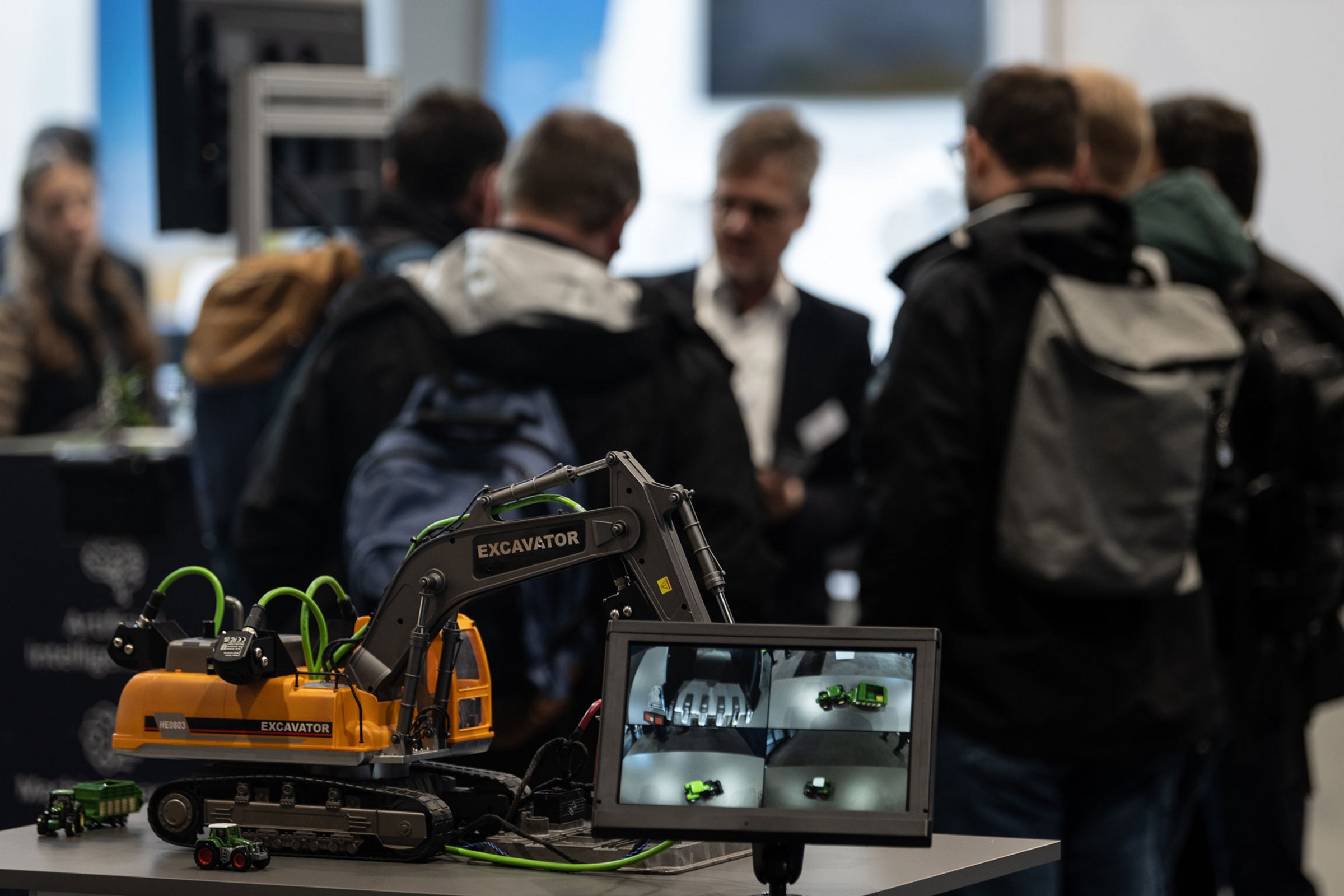
The range of solutions for more productive and safer work processes includes, for example, simplified levelling, payload measurement in handling operations, electronic vibration damping and various motion control systems, such as for wheel loaders and telehandlers. The various functions not only contribute to direct work support, such as sensing the bucket load of excavators, but also to collision warning or front and rear guarding. If the systems recognise people or objects in the danger zone, they issue an acoustic and/or visual warning and show the objects on the display - even in poor weather conditions, the driver can keep an eye on areas that are difficult to see.
Intelligent helpers in the cockpit
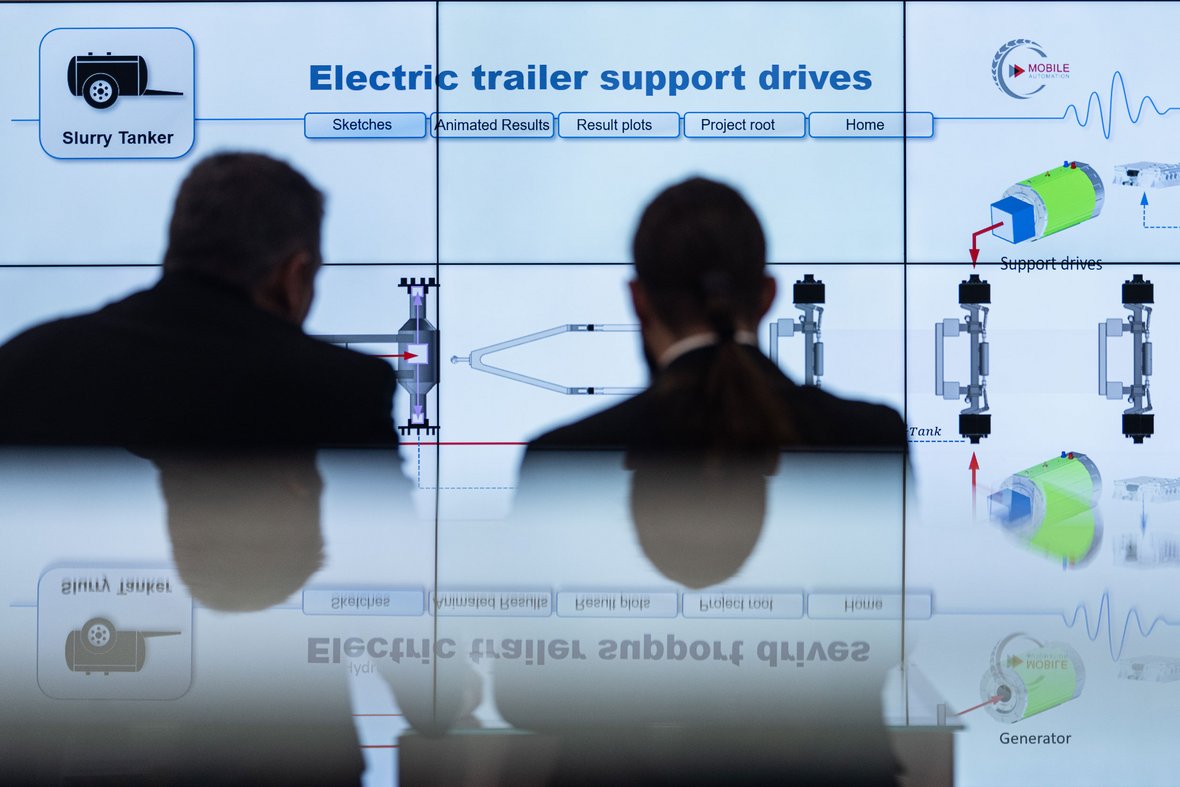
Above all, it is the demand for higher productivity and the shortage of skilled labour that are leading to an increasing number of assistance functions. Vehicle manufacturers and original equipment manufacturers must anticipate this development in the design of human machine interfaces (HMI). Ergonomic joysticks with multidimensional visual and haptic feedback as well as high-resolution, high-contrast, glove-compatible displays with easy-to-understand visualisations ensure an intuitive user experience. And the next stage in the development of HMI concepts is already being heralded at SYSTEMS & COMPONENTS: User interfaces based on extended reality (XR) technologies. They can be used to precisely integrate digital terrain models into the real situation on site or display the machine status in the immediate field of vision.
XR technologies are also designed to increase confidence in the interaction with the machine. The task is to involve and integrate the operator right from the start so that even less experienced people can quickly find their way around a new machine. This is where self-learning assistance systems come in, recognising specific opportunities for improvement. A machine's existing sensors can be used to take measurements during work in order to provide direct feedback in the cab - this enables optimum working techniques to be taught during operation. Thanks to this dialogue-based working method, the driver is actively involved in all optimisation measures. The systems also use videos to show how to correctly shorten the travel path, set the correct bucket angle, reduce the dumping height or utilise the lift limit switch setting. This makes the assistance systems an onboard training programme for excavators, dumpers or crawler tractors.
Simply let the machine "do its thing
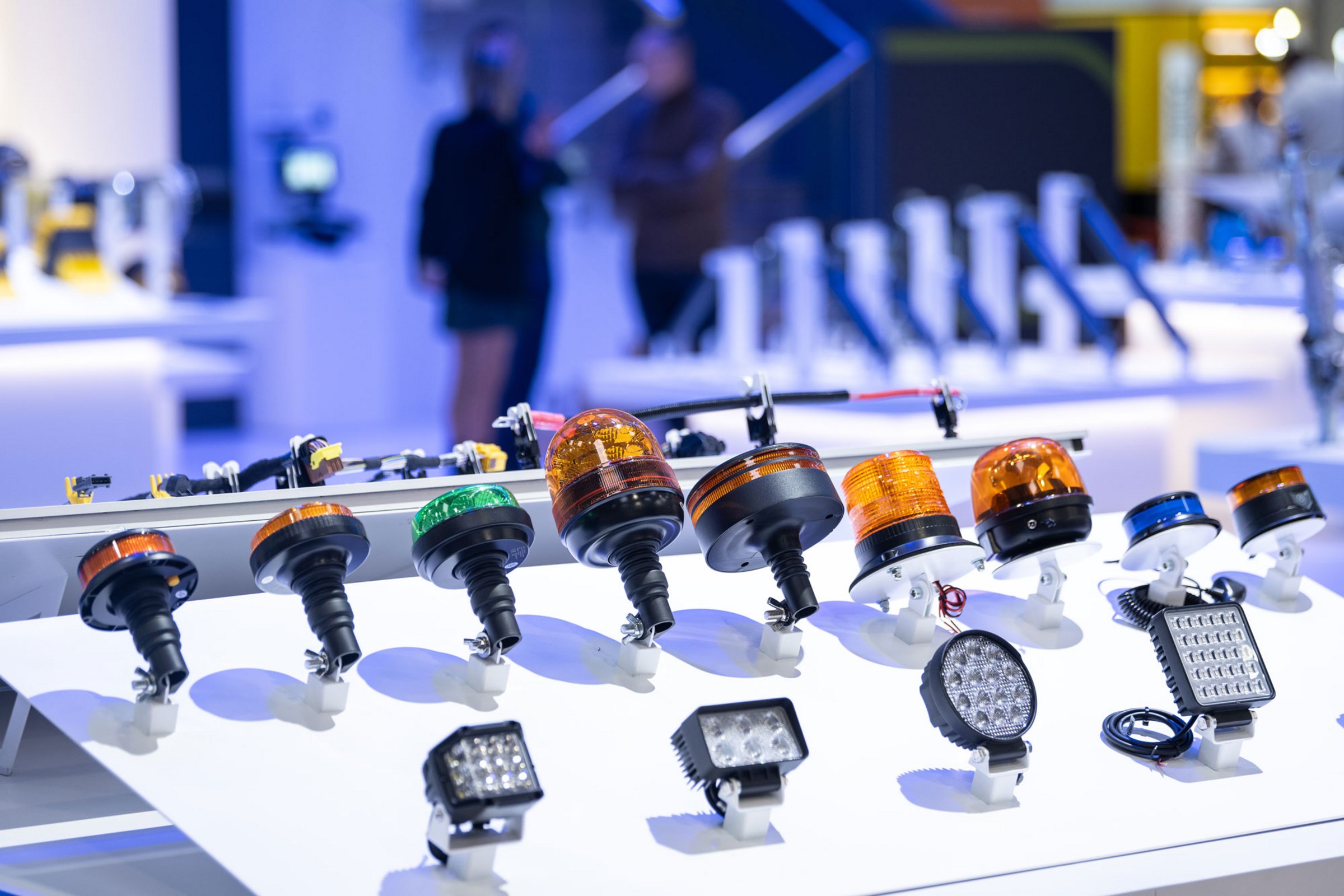
The assistance systems not only increase work efficiency on the construction site. Agricultural machinery such as combine harvesters and self-propelled forage harvesters can also be equipped with comprehensive technology packages that automatically adjust the driving speed to the current engine load and preset target values - ensuring maximum productivity at all times. In addition, stereo camera systems are used to automatically control the rotation and flap position of the discharge chute. Transport vehicles are recognised and the crops are precisely positioned to ensure optimum filling. In addition, the systems assist with important functions when switching between field use and road travel, including activating the rotating beacons, engaging four-wheel drive, adjusting the engine speed and positioning the discharge chute.
But how do you turn the tractor and attachment into a team that works together optimally? Tractor Implement Management (TIM) plays an important role here. The technology developed on the basis of ISOBUS enables bidirectional communication between tractor and implement - and is therefore regarded as a centrepiece of precision farming. While the tractor was previously the determining element in the agricultural process, the implement's sensor and control architecture is now taking the lead thanks to machine-to-machine (M2M) communication.
Tractor and implement become one
The "intelligence" of the trailed implement tells the tractor how much power is required, from accelerating to reducing or increasing the engine speed to braking. A field sprayer can thus control the speed of the tractor in order to minimise possible drift of crop protection products. Special functional extensions enable an implement to control the linkage and the PTO shaft, for example to automatically adjust the working depth based on application maps. This means that deep tillage is only carried out where it is necessary. This protects the soil and saves fuel - a step towards sustainable agriculture.
All this shows: Digitalisation and networking in the off-highway sector opens up new design possibilities for assistance systems, but at the same time increases complexity. Algorithms are taking over more and more functions, making operation more convenient and work safer. As a result, mobile machines require high-performance computers in order to bring together the multitude of sensor information in a targeted manner. "The fusion of camera-based sensors and electrical actuators in combination with cloud and satellite services is a major challenge for machine manufacturers," confirms DLG expert Petra Kaiser.
Autonomy on the rise
Against this backdrop, smart sensor systems are at the top of technology providers' roadmaps, as they allow the greatest possible flexibility in installation and application. This provides manufacturers of mobile machinery with a functional basic construction kit with which they can design their own assistance systems according to the plug-and-play principle - customised to the respective requirements. The sensor kits on show in Hanover consist of various ultrasonic, radar and multi-camera systems. The range of functions includes blind spot monitoring, object detection and manoeuvring assistance.
In addition, the integration of AI-based functions is only made possible by the latest generation of powerful edge controllers and embedded multi-core processors. In addition to 360-degree all-round vision monitoring with person recognition, an additional camera system can be used for AI-supported process optimisation. The systems can be connected to the vehicles' internal bus systems via CAN and RTK (Real Time Kinematic) is available via multi-band GNSS. This allows the mobile machines to be navigated with centimetre precision. From 9 to 15 November, SYSTEMS & COMPONENTS will provide an outlook on what can be expected in the off-highway sector in the coming years and how the next level of autonomy can be achieved.